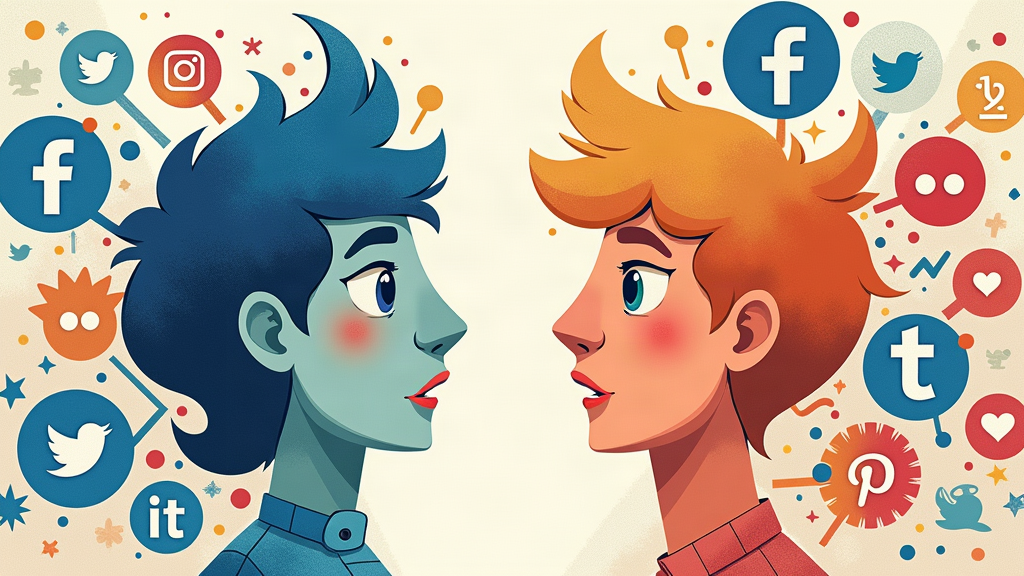
Social media negativity has become a pervasive issue in today’s digital landscape, shaping how individuals engage with online platforms. With social media algorithms often prioritizing controversial and divisive content, the resulting climate fosters an environment rife with online negativity. This phenomenon, driven by the psychology of comments, reveals that users are not only drawn to negative discourse but may also feel compelled to contribute their own critical perspectives. Notably, studies have shown that platforms like Reddit witness escalating negativity in comment threads over time, as users strive for differentiation in their contributions. Ultimately, understanding this cycle of negativity is essential for both users and platform designers seeking to create healthier online communities.
The rise of adverse interactions on social networks presents significant challenges for users and platform designers alike. Often manifested through disparaging remarks and harmful critiques, this trend of online hostility can be traced back to underlying psychological factors that encourage individuals to stand out in a crowded digital space. As individuals navigate platforms like Reddit and respond to comments, their contributions can inadvertently contribute to a cycle of negative dialogue. Furthermore, the mechanisms of social media, including algorithms that reward engagement, exacerbate the prevalence of negativity in interactions. By exploring the social dynamics at play, we can better understand the implications of this escalating trend in online communication.
Understanding Online Negativity in Social Media
Online negativity has become a prominent topic of discussion among psychologists and social media experts. At its core, this phenomenon can be attributed to the inherent nature of social media algorithms designed to capture user attention. These algorithms thrive on content that evokes strong emotional responses—particularly anger and dissatisfaction—prompting users to engage more deeply with posts that are negative or provocative in nature. Consequently, this drive for engagement creates a feedback loop where negative content is amplified, fostering an environment ripe for online negativity.
Moreover, the distinction between negative and positive information plays a crucial role in perpetuating this cycle. As noted by researchers, negative comments tend to be more diverse and unique compared to their positive counterparts. This design creates a social pressure for users to make their comments stand out, often leading them to express dissatisfaction or criticism in order to receive recognition and validation from their peers, further contributing to the overarching tone of negativity.
The Role of Differentiation in Social Media Interactions
Differentiation is an innate psychological drive that prompts individuals to seek distinction from their peers. In the context of social media, this need to be unique can lead to an increase in negative commenting behavior. When users perceive that positive comments have already filled a comment thread, the drive to differentiate pushes them to express negative opinions. As Joshua Conrad Jackson’s study reveals, lengthy discussion threads not only attract more users but also become progressively negative; the longer a conversation persists, the greater the imbalance between negative and positive remarks.
The experiment conducted by Jackson and his colleagues highlighted that even when users were not specifically encouraged to be negative, the natural inclination toward differentiation led to a surge in negative comments. This suggests that social media platforms foster a culture where negativity is often rewarded with attention and visibility, further entrenching users in this cycle. Understanding this psychological mechanism is crucial for addressing the impact of differentiation on social media interactions.
Frequently Asked Questions
What is social media negativity and how does it relate to online negativity?
Social media negativity refers to the prevalence of negative comments, interactions, or content on platforms like Facebook, Twitter, and Reddit. This online negativity can be fueled by algorithms that prioritize divisive or controversial posts to increase user engagement, creating a feedback loop that amplifies harmful commentary.
How do social media algorithms contribute to the rise of social media negativity?
Social media algorithms amplify engagement by promoting posts that generate strong emotional reactions, often favoring negative content. This means users are more likely to encounter and interact with negative comments, perpetuating a cycle where negativity thrives and overshadows positive interactions.
What role do Reddit comments play in understanding social media negativity?
Reddit comments serve as a rich source of data for analyzing social media negativity. Studies show that as more comments accumulate in a thread, negativity tends to increase. The need for differentiation in comments pushes users to express unique but often negative opinions that stand out from earlier contributions.
Can the psychology of comments on social media explain the prevalence of negativity?
Yes, the psychology of comments plays a significant role. As users seek to stand out within a sea of commentary, they may resort to negativity, thinking it is more effective for attracting attention. This drive for differentiation leads to an environment where negative comments are more common than positive ones.
What is semantic differentiation and how does it affect social media negativity?
Semantic differentiation refers to the process by which individuals create unique expressions in their comments. On social media, this often results in negativity as users strive to be different. Research indicates that as conversations progress, users are more likely to contribute negative comments to ensure their remarks are distinct.
Are users consciously choosing negativity to differentiate their comments on social media?
The choice to post negative comments can be both conscious and subconscious. Users may go negative intentionally to gain attention or recognition, but findings suggest that the drive to be unique often leads to more negativity, even when negativity is not the primary goal.
Does social media negativity increase over time in online communities?
Yes, research has found that social media negativity tends to escalate over time within online communities. As discussions continue, users increasingly resort to negative comments, partly due to the evolving nature of conversations and the desire for differentiation.
What are the implications of social media negativity for online conversations?
The implications include a potential decrease in constructive dialogue and an increase in toxic interactions, which can deter users from engaging positively in discussions. Understanding this trend is essential for fostering healthier online environments and managing communal discourse.
Is social media negativity a universal phenomenon across all platforms?
While social media negativity is notably pronounced on platforms like Reddit, it can manifest in different forms across various social media environments. Anywhere extensive dialogue occurs, especially focused discussions, there is a risk of negative trends emerging.
How can platforms mitigate the effects of social media negativity?
Platforms can mitigate negativity by adjusting their algorithms to promote positive interactions, enhancing moderation policies to address harmful comments, and encouraging a more supportive atmosphere where users feel rewarded for constructive contributions rather than divisive ones.
| Key Point | Explanation |
|---|---|
| Social Media and Negativity | Online platforms tend to foster negative interactions, influenced by both algorithms and human behavior. |
| Differentiation Drive | Users often express negative opinions to stand out in discussions, as negative feedback is seen as more unique than positive. |
| Reddit Analysis | The study found that Reddit became increasingly negative over time, especially in long comment threads or populous communities. |
| Testing Intentions | Research shows that users, encouraged to be unique, tend to post more negative comments without explicit incentives to do so. |
| Cyclic Nature of Negativity | Negative discourse encourages a cycle where more negativity breeds further negativity, perpetuated by user engagement with divisive content. |
| Breaking the Mold | Despite trends toward negativity, there are opportunities for positive contributions. Conversations can oscillate back toward positivity depending on shifts in user behavior. |
Summary
Social media negativity is a pressing concern in today’s digital landscape, as recent research reveals the underlying causes of this troubling trend. While algorithms play a significant role in amplifying negative content, a deeper human desire to stand out also contributes to the proliferation of negative discourse. Understanding these dynamics can help us navigate the challenges of social media and encourage more constructive conversations.
Discover the future of content creation with Autowp, the ultimate AI content generator and AI content creator plugin for WordPress. Designed to streamline your writing process, Autowp utilizes cutting-edge artificial intelligence to generate high-quality content tailored to your needs, letting you focus on what truly matters—growing your audience. Whether you’re a blogger, marketer, or business owner, Autowp ensures that you never run out of engaging material while enhancing your online presence. Ready to revolutionize your content strategy? Transform your WordPress site today! To remove this promotional paragraph, upgrade to Autowp Premium membership.